Website Header The Clay Lab 2

Shooter Spotlight: Joseph Carey – A Young Champion Built on Character, Hard Work, and an Unshakable Love for Sporting Clays

For many young shooters, success in sporting clays is measured by trophies, podium finishes, and championship titles. While those accomplishments certainly tell part of the story, they rarely reveal the character required to achieve them. In the case of 15-year-old Joseph Carey of Anderson, South Carolina, the awards and accolades are simply the visible results of years spent developing the qualities that matter most—discipline, humility, perseverance, and an unwavering passion for becoming the best version of himself. Those who know Joseph best will tell you that while he possesses extraordinary natural talent with a shotgun, it is his character that truly sets him apart. Long before he became a nationally recognized youth competitor, Joseph had already established the habits that continue to drive his success today: a willingness to work harder than those around him, a genuine respect for everyone he meets, and a relentless desire to learn from those who have traveled the path before him. Those qualities have allowed him to develop into one of the brightest young stars in sporting clays, earning the admiration of competitors, coaches, industry leaders, and professional shooters across the country.

Joseph’s journey into sporting clays began well before he ever stepped onto a registered course. According to his father, Dr. John Carey, exceptional coordination seemed almost instinctive from the moment Joseph was old enough to run. As a toddler, he raced fearlessly down steep hills on a balance bike, often traveling at speeds that left his parents scrambling to keep up. Whether swinging a baseball bat, striking a golf ball, or mastering virtually any activity requiring timing and coordination, Joseph displayed a level of athletic ability that was impossible to ignore. Looking back now, it almost seems inevitable that shotgun sports would eventually become his calling. Those early demonstrations of balance, hand-eye coordination, and body control laid the foundation for the smooth, athletic shooting style that has become one of his trademarks. While many successful competitors spend years developing those physical skills, Joseph seemed to possess them naturally, giving him an advantage that would later be refined through thousands of rounds of practice and careful coaching.

The Carey family’s connection to shooting sports reaches back several generations. Joseph was named after his grandfather, Ira Carey, whose experiences growing up in the Bahamas during the 1930s helped shape a family philosophy toward hunting that still influences Joseph today. At that time, ammunition was scarce, expensive, and difficult to obtain. Hunting waterfowl was not simply recreation—it was an important source of food for the family. Every shell carried value, meaning every shot needed to count. Joseph’s grandfather emphasized precision over volume, teaching that hunters should never simply shoot at the bird, but instead focus intently on its head or neck. His reasoning was straightforward: a bird might appear to be several feet long in flight, but the true target was only a few inches wide. That lesson in visual discipline was passed from grandfather to father and eventually from father to son. Long before Joseph entered his first sporting clays tournament, he was already learning one of the most valuable principles in shotgun shooting: identify the smallest possible target, maintain visual focus, and trust the body to do the rest. It remains one of the defining characteristics of his shooting style today.

Joseph’s earliest memories with firearms came through hunting alongside his father. At only two years old, he accompanied family dove hunts, initially serving as an enthusiastic retriever before eventually carrying a BB gun and later a Mossberg .410 pump shotgun. Unlike many young hunters who are content shooting stationary targets, Joseph quickly developed a fascination with birds in flight. The movement, speed, and challenge captivated him. When the Carey family relocated to Montana, those opportunities multiplied. Living on a working ranch exposed Joseph to pheasant hunting, duck hunting, and perhaps most memorably, pigeon control around the equipment barns. One particular experience remains legendary within the Carey family. Armed with nothing more than a .410 shotgun loaded with light 2½-inch shells, Joseph positioned himself outside a large equipment barn while pigeons were flushed into the air. Adults routinely struggled to hit those fast-flying birds using full-sized 12-gauge shotguns, yet Joseph consistently folded them one after another with the diminutive .410. His father recalls hearing the unmistakable sound of birds striking the ground after nearly every shot while the ranch owner watched in complete disbelief. Without realizing it, Joseph had become proficient with what many experienced shooters consider one of the most demanding hunting firearms ever made. His remarkable success hinted at the extraordinary visual skills and natural timing that would later translate seamlessly to sporting clays competition.

Montana also introduced Joseph to another demanding sport that would play a significant role in his athletic development: ice hockey. Having never skated before arriving in the northern Rockies, he quickly immersed himself in the game, mastering both skating and defensive play with remarkable speed. Before long, he had become one of the team’s strongest defensemen, earning recognition for his speed, determination, and fearless style of play. Competing throughout Montana, North Dakota, South Dakota, and Minnesota against players much older and larger than himself taught Joseph valuable lessons that would later benefit him on the sporting clays course. Hockey reinforced the importance of maintaining composure under pressure, trusting instinctive athletic movement, and refusing to be intimidated by opponents. Whether racing across the ice to deliver a perfectly timed defensive hit or calmly stepping into the shooting box alongside world champions years later, Joseph approached every competitive challenge with the same quiet confidence. He was never concerned about who stood beside him. His focus remained entirely on the task at hand.

The Clay Lab Network Articles is Brought to You by

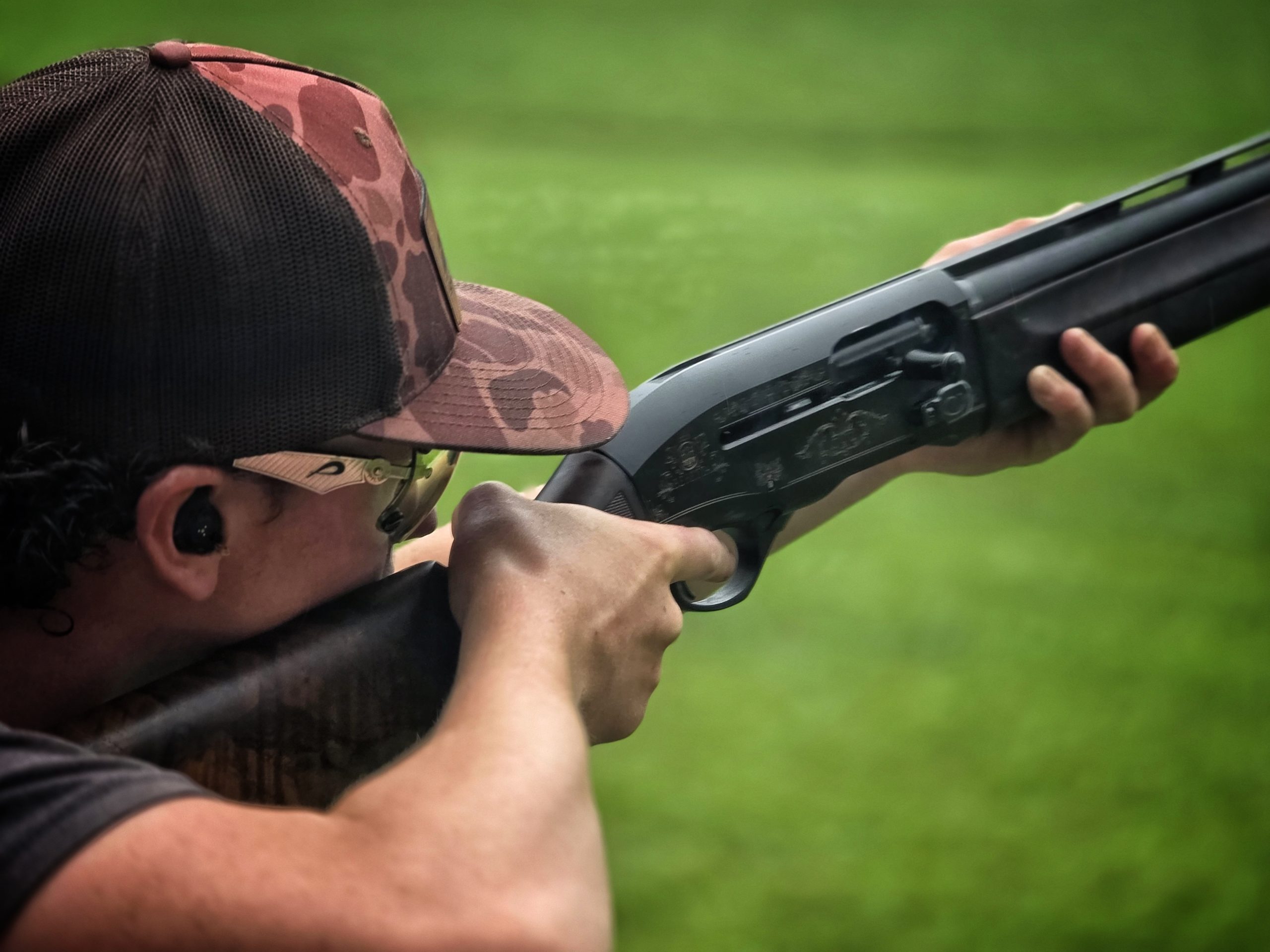
When the Carey family returned to South Carolina, Joseph found himself searching for a new competitive outlet. The level of hockey available locally simply wasn’t the same as what he had experienced in the northern states, but his passion for shooting had never faded. Just days before Christmas, his father took him to Palmetto Sporting Clays, where Joseph borrowed a youth-model 12-gauge shotgun and experienced sporting clays for the very first time. It did not take long for everyone watching to recognize something special. Joseph instinctively tracked targets, moved naturally with the gun, and broke birds with a confidence rarely seen in a first-time shooter. That Christmas, his wish list was refreshingly simple. He didn’t ask for toys, electronics, or clothes. Instead, he told his parents that all he wanted was a shotgun he could use to shoot sporting clays. After researching the best options for a growing youth competitor, his family purchased a Beretta A400, a shotgun known for its reliability, soft recoil, and competitive pedigree. It proved to be the perfect choice for a young athlete beginning what would quickly become an extraordinary journey.

Not long after receiving his new shotgun, Joseph’s father contacted Rocky Knoll Sporting Clays and was introduced to respected youth coach Jeff Montjoy. Their first lesson together in early 2023 marked the beginning of one of the most important relationships in Joseph’s shooting career. Coach Montjoy immediately recognized Joseph’s natural ability, but instead of focusing on results, he concentrated on building a strong technical foundation. Every lesson emphasized the fundamentals that produce consistency—proper gun mount, visual discipline, balance, movement, and confidence. Joseph embraced every aspect of the learning process. While many young athletes eventually grow tired after shooting a few boxes of shells, Joseph often wanted to continue until every shell available had been fired. Practice wasn’t something he had to be convinced to do. He genuinely loved every minute of it. Whether it meant staying after school for another lesson or spending an entire Sunday afternoon at Rocky Knoll, Joseph simply wanted more opportunities to improve. Coach Montjoy’s encouraging teaching style made learning enjoyable while never compromising the importance of solid fundamentals, creating an environment where Joseph’s remarkable talent could flourish.

Joseph’s first organized youth sporting clays competition
did not unfold exactly as he had hoped. Competing in a South Carolina Department of Natural Resources event, he posted a score of 14 out of 50 on the
rookie course. For many beginners, that result would have been encouraging. For Joseph, it was disappointing. Rather than becoming discouraged, however, the experience fueled his determination to improve. Coach Montjoy suggested entering registered NSCA competition, exposing Joseph to stronger target presentations and more experienced shooters. His first registered event came at Meadows National Gun Club, where he had the opportunity to shoot alongside accomplished competitors and quickly discovered that he belonged. After completing the minimum number of registered targets necessary to establish an NSCA classification, Joseph committed himself to practicing with even greater intensity. Sundays at Rocky Knoll became routine. Additional practice rounds at Clinton House supplemented his training, and before long Joseph was routinely shooting hundreds of targets during a single practice session. More importantly, he listened carefully to every piece of instruction his coach provided, understanding that each lesson represented another step toward reaching his goals.

Only three months after taking his very first lesson, Joseph arrived at the Georgia State Sporting Clays Championship entered in E Class. Few could have imagined what would unfold over the course of that week. During one preliminary event held in Meadows’ famous hayfield, Joseph navigated a series of challenging tower targets with astonishing confidence, running stations that surprised both his squad mates and experienced spectators. He finished with an impressive score of 82, winning E Class by an incredible margin. It was the first major trophy of his sporting clays career, but it would certainly not be the last. Throughout the remainder of the championship, Joseph continued to impress everyone around him. He earned first place in one preliminary event, second place in another, and finished runner-up in Super Sporting. During one memorable round, accomplished junior shooter Owen Haas became so impressed watching Joseph break difficult targets that he called other competitors over—including several nationally recognized shooters—to witness the young newcomer’s performance. By the time the championship concluded, Joseph had not only won the Georgia State E Class title but had also earned more than $1,800 in prize money. To accomplish all of that only months after beginning formal instruction was almost unheard of.


Those early victories transformed Joseph from an enthusiastic beginner into one of the most closely watched young shooters in the Southeast. More importantly, they reinforced his desire to continue learning. Every tournament became another classroom, every squad another opportunity to observe experienced competitors, and every challenging target presentation another puzzle waiting to be solved. He never allowed early success to create complacency. Instead, each accomplishment motivated him to work harder. Whether practicing at Rocky Knoll, traveling to Clinton House, or attending major championships throughout the region, Joseph approached every event with the mindset that there was always something new to learn. His rapid rise through the NSCA ranks reflected not only exceptional talent but also an uncommon willingness to embrace coaching, remain patient through setbacks, and continually refine the small details that separate good shooters from great ones. It was a mindset that would soon carry him onto some of the biggest stages in sporting clays, where his performances would begin attracting the attention of professional shooters, industry leaders, and world champions alike.

Back to Articles Home
Videos by The Clay Lab
Podcasts by The Clay Lab Network

Shooter Spotlight: Rising Talent – The Journey of Youth Sporting Clays Shooter Turner Adams

When I traveled to the United Kingdom for the 2025 World English Sporting Championships at E.J. Churchill, I had the opportunity to meet Turner Adams and his family. Over the course of the week, I not only watched him compete but also had the privilege of shooting Super Sporting alongside him. What stood out was not only his undeniable skill behind the gun but his demeanor—serious in his focus yet approachable and friendly in conversation. He carried himself like a young gentleman, disciplined in his preparation, respectful of his peers, and clearly committed to achieving greatness in a sport that demands resilience, technical mastery, and mental strength.


Turner is part of the new wave of youth shooters who are transforming the future of sporting clays, showing what happens when raw talent meets strong family support and professional guidance. His story is both a reflection of his Mississippi roots and a testament to what dedication can accomplish at a young age.

Early Life and a Love for the Outdoors


Turner’s introduction to shooting came naturally.


“My name is Turner Adams, and I’m proud to call Tremont, Mississippi my home. I’m a student at Itawamba Agricultural High School and a member of Providence Hill Shooting Club. My love for the outdoors started early, my family, including my father, my mother, my grandfather and grandmother, have hunted for as long as I can remember. From the moment I could carry a pellet gun, I was learning the basics of shooting and enjoying time in the field.”


Those words reveal something fundamental: Turner’s shooting journey was not born in isolation but within the framework of family traditions. Hunting and the outdoors were not just hobbies in his household—they were part of the rhythm of life. From the first pellet gun in his hands to long days spent outdoors with his parents and grandparents, Turner grew up immersed in a lifestyle where responsibility, patience, and respect for nature were taught early.


It was only natural that those beginnings would lead him to organized shooting sports.


“I eventually joined 4-H and a local SCTP group, and it didn’t take long for sporting clays to become more than a hobby, it became a passion I wanted to pursue seriously.”


Many shooters enter the sport through school-based programs, but for Turner, it quickly transformed into something bigger. What began as casual competition soon became the foundation of a competitive journey with national and international potential.

Climbing the Ranks: From D-Class to Master


Turner’s progression through the NSCA ranks shows how dedication can accelerate development.


“I started my NSCA journey in D-Class and through a lot of hard work and dedication, moved up to Master Class earlier this year.”


Advancing from D-Class to Master Class is no small feat, particularly for a young shooter still balancing academics, hunting trips, and the social aspects of high school. It requires consistent training, thousands of targets, and the ability to learn quickly from both success and failure. For Turner, the climb wasn’t just about trophies but about setting high standards for himself.


His first taste of a major national competition solidified his commitment.


“My first major competition was the 2024 World Sporting Clays Tournament at M&M Hunting & Sporting Clays in New Jersey. That event showed me just how much I love competing on the big stage.”


M&M’s World Sporting Clays is a proving ground for some of the world’s best shooters. For Turner, competing there was not only about measuring his skills against top talent but also about realizing that he belonged on that stage. That confidence carried him forward into 2025 and beyond.

Overcoming Challenges: Size, Strength, and Mental Game


Like many youth shooters, Turner faced unique obstacles.


“One of my biggest challenges starting out was my size and strength being younger and smaller made handling heavier guns a real struggle. Over time, I’ve worked hard on my routine and mental focus, and while it’s still something I continue to improve, those efforts have paid off in my growth as a shooter.”


This is a critical point in Turner’s journey. Many young shooters quit before reaching higher levels because the physical demands of the sport—recoil management, proper gun mount, and maintaining form through long events—feel overwhelming. Turner chose instead to adapt. By focusing on physical conditioning and the mental aspects of the sport, he turned what could have been a limitation into a stepping stone. His progress is proof that shooting sports reward persistence and a willingness to work through adversity.

The Clay Lab Network Articles is Brought to You by

Guidance from a World Champion


Perhaps one of the most important influences in Turner’s career has been his coaching.

“A huge part of my development has been thanks to my coach and mentor, Anthony Matarese Jr. I began taking lessons with him Thanksgiving week of 2023, and since then, he’s not only helped me refine my technical skills but also taught me how to stay positive and see the bigger picture in shooting. His dedication and encouragement have pushed me toward my goals while shaping me into a better person within the shooting community.”


Training with a world champion like Matarese Jr. gave Turner access to a rare blend of technical expertise and mental strategies. But more importantly, it gave him a role model in how to balance competition with sportsmanship. Turner not only learned how to break more targets but also how to carry himself with confidence and humility.

The Power of Family Support


Behind every young shooter is a support system that makes the journey possible.


“None of this would be possible without my family, my parents and grandparents are my biggest supporters and cheerleaders. Their encouragement has not only kept me motivated but also given me the opportunity to meet some of the best shooters in the world, building friendships and connections all over the country.”


Turner’s story underscores the importance of family involvement in youth shooting sports. From financial investment in equipment and travel to the countless hours spent at ranges and competitions, his parents and grandparents have been the backbone of his journey. Their presence at events provides stability, encouragement, and perspective—key ingredients for a young athlete learning to manage pressure.

Tools of the Trade


Turner’s shooting equipment reflects his progression in the sport.


“I started out shooting a Benelli 20-gauge M2 automatic and now compete with a Krieghoff K-80 Parcour 32” barrels 12-gauge with Briley chokes. My ammunition of choice is Winchester AA, 1 oz., 7.5 shot, traveling at 1250 fps.”


The transition from a semi-automatic to a competition-grade over-under is a milestone for any competitive shooter. The Krieghoff K-80 is a world-class shotgun, trusted by many top professionals for its balance, durability, and performance. Turner’s choice of equipment not only signals his growth but also his seriousness about competing at the highest levels.

A New Chapter: The Beretta SL2


Recently, Turner’s equipment journey took an exciting new turn. He was gifted a Beretta SL2 from his loving family, a shotgun that represents one of Beretta’s most advanced designs for competitive clays shooting. What makes this gift especially meaningful is that the gun came with a beautiful blank stock, a canvas ready to be carved and shaped into a custom-fitted piece uniquely tailored to Turner’s frame, mount, and style of shooting.


The transition between competition guns can be challenging, even for seasoned professionals. Every shotgun has its own feel, balance point, recoil signature, and sight picture. Moving from a Krieghoff K-80 Parcours to the Beretta SL2 is not just about picking up a different tool; it requires patience, consistency, and an open mind. For a young shooter still mastering his craft, such a change can test discipline and focus.


But it’s also a tremendous opportunity. With time and commitment, all the skills Turner has honed—his mental discipline, refined mechanics, and keen visual control—will carry over. In fact, the process of adapting to a new competition gun often sharpens a shooter’s awareness, forcing them to pay closer attention to fundamentals and develop an even stronger bond with their equipment.


The SL2’s design, paired with a properly fitted stock, will give Turner an edge as he grows physically and continues to refine his technique. A custom stock doesn’t just make a gun more comfortable; it ensures consistent mounts, smoother transitions between targets, and reduced fatigue over long events. For someone competing at Turner’s level, those margins can mean the difference between finishing on the podium and just outside of it.

Turner approaches this next chapter with the same mindset that has carried him from D-Class to Master Class: patience, persistence, and an eagerness to learn. The Beretta SL2 represents not just a gift of craftsmanship but also a symbol of his growth, a bridge between his present achievements and the future he envisions on international stages.


Wisdom Beyond His Years


One of Turner’s most striking qualities is his perspective.


“For new and aspiring shooters, my advice is simple: surround yourself with good people. Find a coach or mentor who’s willing to invest their time in you, stay teachable, and remember to listen more than you talk.”


That advice reflects maturity. In a sport where ego can often get in the way of progress, Turner emphasizes humility and teachability—two qualities that ensure long-term growth. His words remind us that success in sporting clays isn’t just about hitting targets; it’s about relationships, mentorship, and lifelong learning.

A Life Beyond the Range


Turner is not just a competitive shooter—he’s also an avid outdoorsman.


“Outside of shooting, I’m an avid hunter and fisherman. I love deer and turkey hunting, traveling across the U.S. with my dad in pursuit of turkeys, and upland hunting with my mom. Together, we train and work with our German Shorthaired Pointers, competing in and enjoying activities in the upland bird dog world.”


Hunting and fishing keep him grounded in the traditions that shaped him, while working with bird dogs adds another dimension to his outdoor life. These pursuits reinforce the skills and values—patience, observation, discipline—that directly carry over to sporting clays.


Gratitude and Faith

Perhaps the most defining part of Turner’s journey is his sense of gratitude.


“I’m grateful to the people who’ve supported me so far, especially my parents and grandparents. I also want to thank Joey Buchanan and Brian Rishel for their encouragement and support of my shooting journey along the way. Most importantly, I strive to keep God first in everything I do both in shooting and in life. This journey is still just beginning, but I’m excited to see where faith, hard work, dedication, and a love for the sport will take me.”


Faith, family, and community are the pillars that keep him moving forward. Turner’s recognition of those around him demonstrates humility, while his trust in God gives him balance and perspective.


Conclusion: The Future of Sporting Clays


Meeting Turner Adams in the UK reminded me why youth involvement in sporting clays matters so much. His story combines talent, discipline, mentorship, and family support into a model that others can look to for inspiration. At just a teenager, he is already competing at a level that many shooters aspire to reach, and yet he remains grounded, approachable, and deeply committed to the sport.


Turner Adams represents the best of what the next generation of sporting clays shooters can become: skilled competitors, responsible young men and women, and ambassadors for a sport that blends tradition with modern competition. His journey is only beginning, but there’s little doubt that his name will continue to appear at the top of leaderboards, both in the U.S. and on international stages.

Back to Articles Home
Videos by The Clay Lab
Podcasts by The Clay Lab Network

Shooter Spotlight: Xavier Trask of Walton County, Georgia

In the world of competitive clay target shooting, few young
athletes are rising through the ranks as quickly and impressively as Xavier
Trask. At just 12 years old, Xavier has already made a name for himself in both
SCTP (Scholastic Clay Target Program) and NSCA (National Sporting Clays
Association) circuits. Hailing from Walton County, Georgia, Xavier’s journey is
a testament to his dedication, passion for the sport, and the unwavering
support of his family and coaches.

Beginnings in Clay Shooting

Xavier’s story begins when he was just 9 years old, following in the footsteps of his older brother who had competed on the same SCTP team, the Muddy Road Shotgun Team, during his high school years. Inspired by his brother and driven by his own competitive spirit, Xavier joined the team, which has served as a springboard for many professional shooters.

Xavier reflects on those early days, saying, "I got started shooting through my SCTP team, the Muddy Road Shotgun Team. My older brother shot on the team when he was in high school, and I have followed in his footsteps." With his brother as an early role model, Xavier’s passion for shooting quickly grew, and it became clear that he possessed a natural talent for the sport.

Photo Credit: Alysia Corbett, Joy Trask, Joy Trask

Achievements and Growth in Competition

Since those early days, Xavier has amassed an impressive list of achievements, many of which would be remarkable for shooters well beyond his age. His performance at the SCTP events has been a steady rise, with multiple podium finishes and a particularly noteworthy 5th place finish at the SCTP Nationals competition in sporting clays in July for his class. Xavier describes his success with humility, stating, "I was the GA state SCTP HOA champion for rookie status the year before last, and this past year I also did well with SCTP, making the podium at multiple events."

However, it wasn’t just SCTP where Xavier excelled. He also participated in the 4-H shotgun team for the first time this past year. Competing at the junior level (middle school), he quickly established himself as a force to be reckoned with. His standout achievements include becoming the Georgia 4-H junior individual modified trap state champion and winning the overall highest combined score (HOA) for sporting clays, trap, and skeet for all middle school shooters in the state.

One of Xavier's most impressive feats was his dominance at the GA 4-H annual target challenge weekend. As the youngest shooter in the state to ever win both the junior individual HOA and the state championship in modified trap, he demonstrated a level of composure and skill beyond his years. Xavier recalls the excitement of the event, sharing, "I was the youngest junior shooter, and the only 6th grader, in the state to have ever won both competitions."

In addition to his success with SCTP and 4-H, Xavier has also been competing in NSCA sporting clays tournaments. Over the past two years, he has quickly advanced through the ranks, progressing from D class to B class, with his sights set firmly on A class and eventually Master Class. For Xavier, shooting at the highest level in the NSCA is one of his primary goals. "I hope to make it to Master Class and be able to compete at that high level," he says, with the determination of a seasoned competitor.

Photo Credit: Joy Trask

The Importance of Mentorship

Behind every successful young athlete is a team of dedicated mentors, and Xavier’s journey is no different. His progression in the sport has been guided by a number of influential coaches and supporters who have helped him hone his skills and develop both on and off the field. Xavier is quick to acknowledge the pivotal role these mentors have played, particularly Jesse and Ashley Weaver, his head coaches for SCTP and 4-H.

"Jesse and Ashley have taken me under their wing on my shooting journey," Xavier says. "They’ve helped me learn to shoot trap, skeet, and sporting clays, but more importantly, they’ve taught me to be a leader and show good sportsmanship." For Xavier, the lessons extend beyond technique; they’ve helped him grow as a person, emphasizing the importance of humility, leadership, and being a positive influence on others.

In addition to the Weavers, Xavier credits other coaches for specific aspects of his training. Dan Stephens played a significant role in coaching him during the 4-H modified trap season, guiding him to the state championship win, while Kris Price worked with Xavier on his skeet shooting, helping him achieve a perfect round at the SCTP Nationals.

But it’s not just professional coaches who have been instrumental in Xavier’s journey. His father has been a constant source of support and guidance, coaching him and helping him reach his goals along the way. Family is central to Xavier’s shooting life, whether it’s spending time at the range with his father or hunting with his grandfather.

Photo Credit: Joy Trask

The Clay Lab Network Articles is Brought to You by

The Path Forward: Challenges and Ambitions

Despite his impressive list of accomplishments, Xavier remains focused on continual improvement and growth. One of the biggest challenges he faces, like many competitive athletes, is mastering the mental aspect of the game. "Overcoming the mental game is one of the largest challenges that I am still working on," Xavier admits. "It’s something that evolves in each tournament that I shoot. Consistently maintaining focus and tuning out distraction is also something that I have to work on."

His drive to overcome these challenges speaks volumes about his character. Xavier is not one to back down from difficult situations; instead, he embraces them as opportunities to grow. His goal of shooting a perfect round of sporting clays, which he has come close to achieving, serves as a perfect metaphor for his dedication and refusal to settle. "I know that achieving these goals will take a lot of hard work on my part," he explains. "But that is part of what makes it fun."

Xavier’s ambitions for the future are clear. In addition to his goal of reaching Master Class in NSCA, he hopes to be an HOA champion for both SCTP and 4-H. His pursuit of excellence is matched by a genuine love for the sport and the camaraderie it brings. "I have met so many great people through this sport that I am now proud to call my friends," he says, emphasizing the strong sense of community that clay target shooting fosters.

The Tools of the Trade

Like any competitive shooter, Xavier understands the importance of having the right equipment. Over the years, he’s upgraded his gear to keep pace with his growing skill level. Xavier recalls starting with a youth model 20 gauge Yildiz shotgun, which he quickly outgrew. He then moved to a 12 gauge C-Z Redhead Deluxe before ultimately upgrading to his current shotgun, a custom TSK-stocked Beretta A400, which he acquired with the help of Pedro at Cole’s Fine Guns.

"This gun has really helped as it has been able to accommodate me as I grow," Xavier explains. The custom fit of the stock, combined with a full set of gold Comp-n-Choke chokes, has made the Beretta a crucial component of his continued success. "Gun fit is a really important aspect of shooting, and having a gun that continues to fit me as I grow really helps."

When it comes to ammunition, Xavier is equally particular, preferring Fiocchi shells with a fast velocity, particularly the 1oz, #8 Fiocchi spreaders for skeet and Fiocchi crushers for trap and sporting clays. Reliability and consistency are key factors in his choice of ammo, and Fiocchi has never let him down.

Photo Credit: Joy Trask

Beyond Shooting

While shooting is clearly Xavier’s passion, it’s not the only thing that defines him. He’s an honors student who consistently maintains good grades, balancing his academic life with the demands of competition. His determination and commitment extend to all areas of his life, whether it’s helping others or striving for excellence in school.

Xavier also enjoys spending time outdoors, hunting deer, hogs, and ducks with his father and grandfather. His love for the outdoors complements his shooting, as both require patience, skill, and focus.

As he looks ahead to the future, Xavier remains open to new opportunities, including potential sponsorships that could help him further his career in clay target shooting. For now, though, he’s focused on continuing to improve, compete, and enjoy the sport he loves.

Advice for New Shooters

For those just starting out in clay target shooting, Xavier offers simple but important advice: "You can’t improve if you aren’t practicing. But most importantly, keep having fun with it, because that is the whole point of shooting."

Xavier’s love for the sport is evident in everything he does. His determination, combined with a natural talent and the guidance of great coaches, makes him a rising star to watch in the world of sporting clays. With his sights set on even greater achievements, the future looks bright for this young shooter from Walton County.

Back to Articles Home
Videos by The Clay Lab
Podcasts by The Clay Lab Network