For many young shooters, success in sporting clays is measured by trophies, podium finishes, and championship titles. While those accomplishments certainly tell part of the story, they rarely reveal the character required to achieve them. In the case of 15-year-old Joseph Carey of Anderson, South Carolina, the awards and accolades are simply the visible results of years spent developing the qualities that matter most—discipline, humility, perseverance, and an unwavering passion for becoming the best version of himself. Those who know Joseph best will tell you that while he possesses extraordinary natural talent with a shotgun, it is his character that truly sets him apart. Long before he became a nationally recognized youth competitor, Joseph had already established the habits that continue to drive his success today: a willingness to work harder than those around him, a genuine respect for everyone he meets, and a relentless desire to learn from those who have traveled the path before him. Those qualities have allowed him to develop into one of the brightest young stars in sporting clays, earning the admiration of competitors, coaches, industry leaders, and professional shooters across the country.


Joseph’s journey into sporting clays began well before he ever stepped onto a registered course. According to his father, Dr. John Carey, exceptional coordination seemed almost instinctive from the moment Joseph was old enough to run. As a toddler, he raced fearlessly down steep hills on a balance bike, often traveling at speeds that left his parents scrambling to keep up. Whether swinging a baseball bat, striking a golf ball, or mastering virtually any activity requiring timing and coordination, Joseph displayed a level of athletic ability that was impossible to ignore. Looking back now, it almost seems inevitable that shotgun sports would eventually become his calling. Those early demonstrations of balance, hand-eye coordination, and body control laid the foundation for the smooth, athletic shooting style that has become one of his trademarks. While many successful competitors spend years developing those physical skills, Joseph seemed to possess them naturally, giving him an advantage that would later be refined through thousands of rounds of practice and careful coaching.
The Carey family’s connection to shooting sports reaches back several generations. Joseph was named after his grandfather, Ira Carey, whose experiences growing up in the Bahamas during the 1930s helped shape a family philosophy toward hunting that still influences Joseph today. At that time, ammunition was scarce, expensive, and difficult to obtain. Hunting waterfowl was not simply recreation—it was an important source of food for the family. Every shell carried value, meaning every shot needed to count. Joseph’s grandfather emphasized precision over volume, teaching that hunters should never simply shoot at the bird, but instead focus intently on its head or neck. His reasoning was straightforward: a bird might appear to be several feet long in flight, but the true target was only a few inches wide. That lesson in visual discipline was passed from grandfather to father and eventually from father to son. Long before Joseph entered his first sporting clays tournament, he was already learning one of the most valuable principles in shotgun shooting: identify the smallest possible target, maintain visual focus, and trust the body to do the rest. It remains one of the defining characteristics of his shooting style today.
Joseph’s earliest memories with firearms came through hunting alongside his father. At only two years old, he accompanied family dove hunts, initially serving as an enthusiastic retriever before eventually carrying a BB gun and later a Mossberg .410 pump shotgun. Unlike many young hunters who are content shooting stationary targets, Joseph quickly developed a fascination with birds in flight. The movement, speed, and challenge captivated him. When the Carey family relocated to Montana, those opportunities multiplied. Living on a working ranch exposed Joseph to pheasant hunting, duck hunting, and perhaps most memorably, pigeon control around the equipment barns. One particular experience remains legendary within the Carey family. Armed with nothing more than a .410 shotgun loaded with light 2½-inch shells, Joseph positioned himself outside a large equipment barn while pigeons were flushed into the air. Adults routinely struggled to hit those fast-flying birds using full-sized 12-gauge shotguns, yet Joseph consistently folded them one after another with the diminutive .410. His father recalls hearing the unmistakable sound of birds striking the ground after nearly every shot while the ranch owner watched in complete disbelief. Without realizing it, Joseph had become proficient with what many experienced shooters consider one of the most demanding hunting firearms ever made. His remarkable success hinted at the extraordinary visual skills and natural timing that would later translate seamlessly to sporting clays competition.


Montana also introduced Joseph to another demanding sport that would play a significant role in his athletic development: ice hockey. Having never skated before arriving in the northern Rockies, he quickly immersed himself in the game, mastering both skating and defensive play with remarkable speed. Before long, he had become one of the team’s strongest defensemen, earning recognition for his speed, determination, and fearless style of play. Competing throughout Montana, North Dakota, South Dakota, and Minnesota against players much older and larger than himself taught Joseph valuable lessons that would later benefit him on the sporting clays course. Hockey reinforced the importance of maintaining composure under pressure, trusting instinctive athletic movement, and refusing to be intimidated by opponents. Whether racing across the ice to deliver a perfectly timed defensive hit or calmly stepping into the shooting box alongside world champions years later, Joseph approached every competitive challenge with the same quiet confidence. He was never concerned about who stood beside him. His focus remained entirely on the task at hand.
The Clay Lab Network Articles is Brought to You by

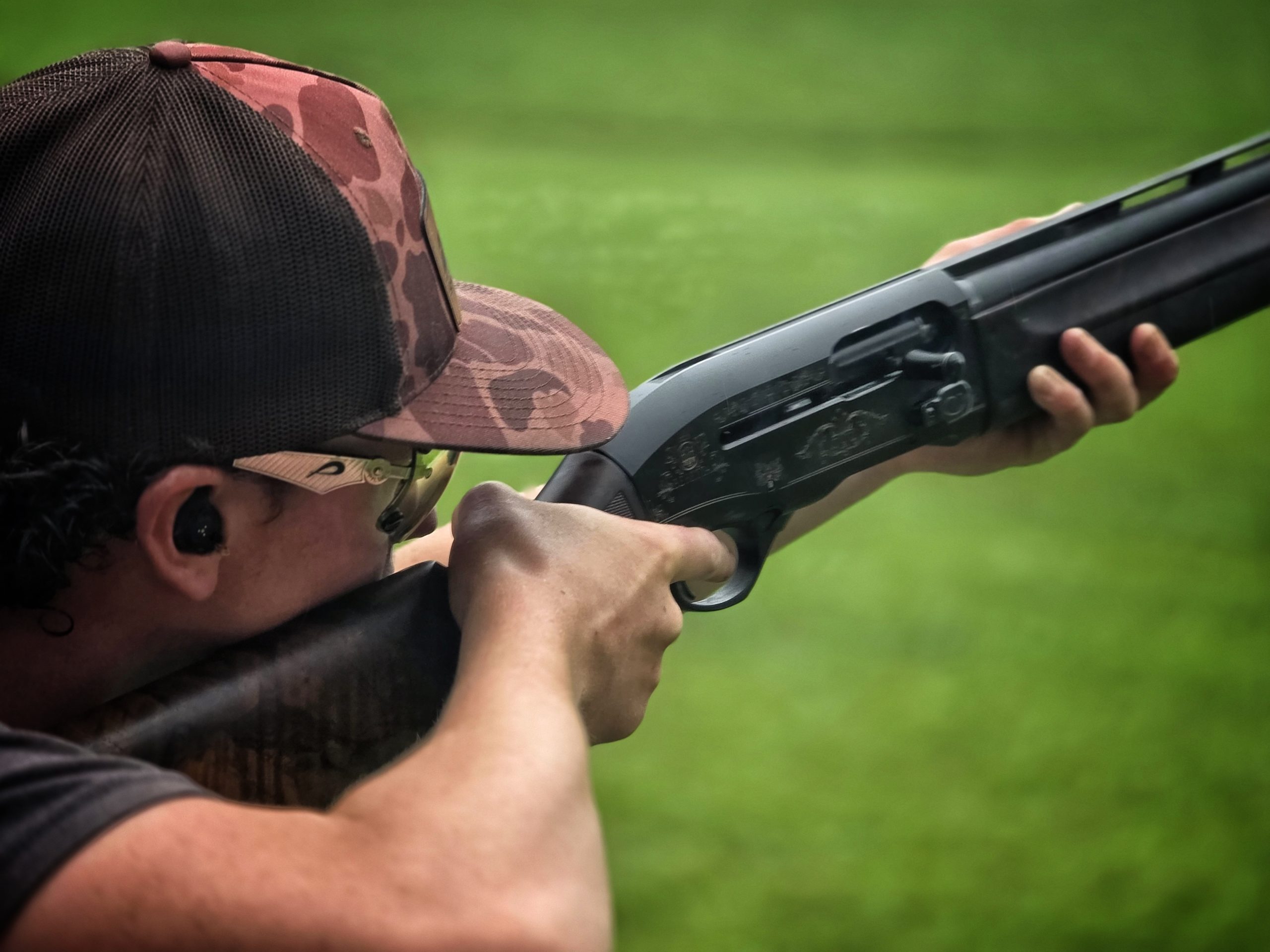
When the Carey family returned to South Carolina, Joseph found himself searching for a new competitive outlet. The level of hockey available locally simply wasn’t the same as what he had experienced in the northern states, but his passion for shooting had never faded. Just days before Christmas, his father took him to Palmetto Sporting Clays, where Joseph borrowed a youth-model 12-gauge shotgun and experienced sporting clays for the very first time. It did not take long for everyone watching to recognize something special. Joseph instinctively tracked targets, moved naturally with the gun, and broke birds with a confidence rarely seen in a first-time shooter. That Christmas, his wish list was refreshingly simple. He didn’t ask for toys, electronics, or clothes. Instead, he told his parents that all he wanted was a shotgun he could use to shoot sporting clays. After researching the best options for a growing youth competitor, his family purchased a Beretta A400, a shotgun known for its reliability, soft recoil, and competitive pedigree. It proved to be the perfect choice for a young athlete beginning what would quickly become an extraordinary journey.
Not long after receiving his new shotgun, Joseph’s father contacted Rocky Knoll Sporting Clays and was introduced to respected youth coach Jeff Montjoy. Their first lesson together in early 2023 marked the beginning of one of the most important relationships in Joseph’s shooting career. Coach Montjoy immediately recognized Joseph’s natural ability, but instead of focusing on results, he concentrated on building a strong technical foundation. Every lesson emphasized the fundamentals that produce consistency—proper gun mount, visual discipline, balance, movement, and confidence. Joseph embraced every aspect of the learning process. While many young athletes eventually grow tired after shooting a few boxes of shells, Joseph often wanted to continue until every shell available had been fired. Practice wasn’t something he had to be convinced to do. He genuinely loved every minute of it. Whether it meant staying after school for another lesson or spending an entire Sunday afternoon at Rocky Knoll, Joseph simply wanted more opportunities to improve. Coach Montjoy’s encouraging teaching style made learning enjoyable while never compromising the importance of solid fundamentals, creating an environment where Joseph’s remarkable talent could flourish.


Joseph’s first organized youth sporting clays competition
did not unfold exactly as he had hoped. Competing in a South Carolina Department of Natural Resources event, he posted a score of 14 out of 50 on the
rookie course. For many beginners, that result would have been encouraging. For Joseph, it was disappointing. Rather than becoming discouraged, however, the experience fueled his determination to improve. Coach Montjoy suggested entering registered NSCA competition, exposing Joseph to stronger target presentations and more experienced shooters. His first registered event came at Meadows National Gun Club, where he had the opportunity to shoot alongside accomplished competitors and quickly discovered that he belonged. After completing the minimum number of registered targets necessary to establish an NSCA classification, Joseph committed himself to practicing with even greater intensity. Sundays at Rocky Knoll became routine. Additional practice rounds at Clinton House supplemented his training, and before long Joseph was routinely shooting hundreds of targets during a single practice session. More importantly, he listened carefully to every piece of instruction his coach provided, understanding that each lesson represented another step toward reaching his goals.
Only three months after taking his very first lesson, Joseph
arrived at the Georgia State Sporting Clays Championship entered in E Class.
Few could have imagined what would unfold over the course of that week. During
one preliminary event held in Meadows’ famous hayfield, Joseph navigated a
series of challenging tower targets with astonishing confidence, running
stations that surprised both his squad mates and experienced spectators. He
finished with an impressive score of 82, winning E Class by an incredible
margin. It was the first major trophy of his sporting clays career, but it
would certainly not be the last. Throughout the remainder of the championship,
Joseph continued to impress everyone around him. He earned first place in one
preliminary event, second place in another, and finished runner-up in Super
Sporting. During one memorable round, accomplished junior shooter Owen Haas
became so impressed watching Joseph break difficult targets that he called
other competitors over—including several nationally recognized shooters—to
witness the young newcomer’s performance. By the time the championship
concluded, Joseph had not only won the Georgia State E Class title but had also
earned more than $1,800 in prize money. To accomplish all of that only months after
beginning formal instruction was almost unheard of.


Those early victories transformed Joseph from an enthusiastic beginner into one of the most closely watched young shooters in the Southeast. More importantly, they reinforced his desire to continue learning. Every tournament became another classroom, every squad another opportunity to observe experienced competitors, and every challenging target presentation another puzzle waiting to be solved. He never allowed early success to create complacency. Instead, each accomplishment motivated him to work harder. Whether practicing at Rocky Knoll, traveling to Clinton House, or attending major championships throughout the region, Joseph approached every event with the mindset that there was always something new to learn. His rapid rise through the NSCA ranks reflected not only exceptional talent but also an uncommon willingness to embrace coaching, remain patient through setbacks, and continually refine the small details that separate good shooters from great ones. It was a mindset that would soon carry him onto some of the biggest stages in sporting clays, where his performances would begin attracting the attention of professional shooters, industry leaders, and world champions alike.