When I traveled to the United Kingdom for the 2025 World
English Sporting Championships at E.J. Churchill, I had the opportunity to meet
Turner Adams and his family. Over the course of the week, I not only watched
him compete but also had the privilege of shooting Super Sporting alongside
him. What stood out was not only his undeniable skill behind the gun but his
demeanor—serious in his focus yet approachable and friendly in conversation. He
carried himself like a young gentleman, disciplined in his preparation,
respectful of his peers, and clearly committed to achieving greatness in a
sport that demands resilience, technical mastery, and mental strength.
Turner is part of the new wave of youth shooters who are
transforming the future of sporting clays, showing what happens when raw talent
meets strong family support and professional guidance. His story is both a
reflection of his Mississippi roots and a testament to what dedication can
accomplish at a young age.
Early Life and a Love for the Outdoors
Turner’s introduction to shooting came naturally.
“My name is Turner Adams, and I’m proud to call
Tremont, Mississippi my home. I’m a student at Itawamba Agricultural High
School and a member of Providence Hill Shooting Club. My love for the outdoors
started early, my family, including my father, my mother, my grandfather and
grandmother, have hunted for as long as I can remember. From the moment I could
carry a pellet gun, I was learning the basics of shooting and enjoying time in
the field.”
Those words reveal something fundamental: Turner’s
shooting journey was not born in isolation but within the framework of family
traditions. Hunting and the outdoors were not just hobbies in his
household—they were part of the rhythm of life. From the first pellet gun in
his hands to long days spent outdoors with his parents and grandparents, Turner
grew up immersed in a lifestyle where responsibility, patience, and respect for
nature were taught early.
It was only natural that those beginnings would lead him
to organized shooting sports.
“I eventually joined 4-H and a local SCTP group, and
it didn’t take long for sporting clays to become more than a hobby, it became a
passion I wanted to pursue seriously.”
Many shooters enter the sport through school-based
programs, but for Turner, it quickly transformed into something bigger. What
began as casual competition soon became the foundation of a competitive journey
with national and international potential.


Climbing the Ranks: From D-Class to Master
Turner’s progression through the NSCA ranks shows how
dedication can accelerate development.
“I started my NSCA journey in D-Class and through a
lot of hard work and dedication, moved up to Master Class earlier this year.”
Advancing from D-Class to Master Class is no small feat,
particularly for a young shooter still balancing academics, hunting trips, and
the social aspects of high school. It requires consistent training, thousands
of targets, and the ability to learn quickly from both success and failure. For
Turner, the climb wasn’t just about trophies but about setting high standards
for himself.
His first taste of a major national competition
solidified his commitment.
“My first major competition was the 2024 World
Sporting Clays Tournament at M&M Hunting & Sporting Clays in New
Jersey. That event showed me just how much I love competing on the big stage.”
M&M’s World Sporting Clays is a proving ground for
some of the world’s best shooters. For Turner, competing there was not only
about measuring his skills against top talent but also about realizing that he
belonged on that stage. That confidence carried him forward into 2025 and
beyond.


Overcoming Challenges: Size, Strength, and Mental Game
Like many youth shooters, Turner faced unique obstacles.
“One of my biggest challenges starting out was my size
and strength being younger and smaller made handling heavier guns a real
struggle. Over time, I’ve worked hard on my routine and mental focus, and while
it’s still something I continue to improve, those efforts have paid off in my
growth as a shooter.”
This is a critical point in Turner’s journey. Many young
shooters quit before reaching higher levels because the physical demands of the
sport—recoil management, proper gun mount, and maintaining form through long
events—feel overwhelming. Turner chose instead to adapt. By focusing on
physical conditioning and the mental aspects of the sport, he turned what could
have been a limitation into a stepping stone. His progress is proof that
shooting sports reward persistence and a willingness to work through adversity.
The Clay Lab Network Articles is Brought to You by

Guidance from a World Champion
Perhaps one of the most important influences in Turner’s
career has been his coaching.
“A huge part of my development has been thanks to my
coach and mentor, Anthony Matarese Jr. I began taking lessons with him
Thanksgiving week of 2023, and since then, he’s not only helped me refine my
technical skills but also taught me how to stay positive and see the bigger
picture in shooting. His dedication and encouragement have pushed me toward my
goals while shaping me into a better person within the shooting community.”
Training with a world champion like Matarese Jr. gave Turner access to a rare blend of technical expertise and mental strategies. But more importantly, it gave him a role model in how to balance competition with sportsmanship. Turner not only learned how to break more targets but also how to carry himself with confidence and humility.
The Power of Family Support
Behind every young shooter is a support system that makes
the journey possible.
“None of this would be possible without my family, my
parents and grandparents are my biggest supporters and cheerleaders. Their
encouragement has not only kept me motivated but also given me the opportunity
to meet some of the best shooters in the world, building friendships and
connections all over the country.”
Turner’s story underscores the importance of family involvement in youth shooting sports. From financial investment in equipment and travel to the countless hours spent at ranges and competitions, his parents and grandparents have been the backbone of his journey. Their presence at events provides stability, encouragement, and perspective—key ingredients for a young athlete learning to manage pressure.
Tools of the Trade
Turner’s shooting equipment reflects his progression in the sport.
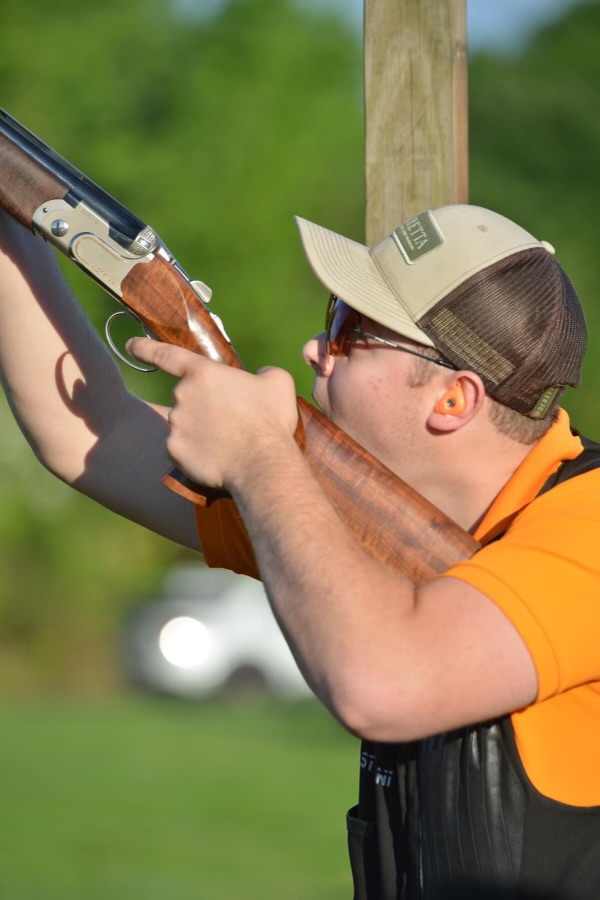
“I started out shooting a Benelli 20-gauge M2 automatic and now compete with a Krieghoff K-80 Parcour 32” barrels 12-gauge with Briley chokes. My ammunition of choice is Winchester AA, 1 oz., 7.5 shot, traveling at 1250 fps.”
The transition from a semi-automatic to a competition-grade over-under is a milestone for any competitive shooter. The Krieghoff K-80 is a world-class shotgun, trusted by many top professionals for its balance, durability, and performance. Turner’s choice of equipment not only signals his growth but also his seriousness about competing at the highest levels.


A New Chapter: The Beretta SL2
Recently, Turner’s equipment journey took an exciting new
turn. He was gifted a Beretta SL2 from his loving family, a shotgun that
represents one of Beretta’s most advanced designs for competitive clays
shooting. What makes this gift especially meaningful is that the gun came with
a beautiful blank stock, a canvas ready to be carved and shaped into a
custom-fitted piece uniquely tailored to Turner’s frame, mount, and style of
shooting.
The transition between competition guns can be
challenging, even for seasoned professionals. Every shotgun has its own feel,
balance point, recoil signature, and sight picture. Moving from a Krieghoff
K-80 Parcours to the Beretta SL2 is not just about picking up a different tool;
it requires patience, consistency, and an open mind. For a young shooter still
mastering his craft, such a change can test discipline and focus.
But it’s also a tremendous opportunity. With time and
commitment, all the skills Turner has honed—his mental discipline, refined
mechanics, and keen visual control—will carry over. In fact, the process of
adapting to a new competition gun often sharpens a shooter’s awareness, forcing
them to pay closer attention to fundamentals and develop an even stronger bond
with their equipment.
The SL2’s design, paired with a properly fitted stock,
will give Turner an edge as he grows physically and continues to refine his
technique. A custom stock doesn’t just make a gun more comfortable; it ensures
consistent mounts, smoother transitions between targets, and reduced fatigue
over long events. For someone competing at Turner’s level, those margins can
mean the difference between finishing on the podium and just outside of it.
Turner approaches this next chapter with the same mindset that has carried him from D-Class to Master Class: patience, persistence, and an eagerness to learn. The Beretta SL2 represents not just a gift of craftsmanship but also a symbol of his growth, a bridge between his present achievements and the future he envisions on international stages.
Wisdom Beyond His Years
One of Turner’s most striking qualities is his
perspective.
“For new and aspiring shooters, my advice is simple:
surround yourself with good people. Find a coach or mentor who’s willing to
invest their time in you, stay teachable, and remember to listen more than you
talk.”
That advice reflects maturity. In a sport where ego can
often get in the way of progress, Turner emphasizes humility and
teachability—two qualities that ensure long-term growth. His words remind us
that success in sporting clays isn’t just about hitting targets; it’s about
relationships, mentorship, and lifelong learning.


A Life Beyond the Range
Turner is not just a competitive shooter—he’s also an
avid outdoorsman.
“Outside of shooting, I’m an avid hunter and
fisherman. I love deer and turkey hunting, traveling across the U.S. with my
dad in pursuit of turkeys, and upland hunting with my mom. Together, we train
and work with our German Shorthaired Pointers, competing in and enjoying
activities in the upland bird dog world.”
Hunting and fishing keep him grounded in the traditions that shaped him, while working with bird dogs adds another dimension to his outdoor life. These pursuits reinforce the skills and values—patience, observation, discipline—that directly carry over to sporting clays.
Gratitude and Faith
Perhaps the most defining part of Turner’s journey is his
sense of gratitude.
“I’m grateful to the people who’ve supported me so
far, especially my parents and grandparents. I also want to thank Joey Buchanan
and Brian Rishel for their encouragement and support of my shooting journey
along the way. Most importantly, I strive to keep God first in everything I do
both in shooting and in life. This journey is still just beginning, but I’m
excited to see where faith, hard work, dedication, and a love for the sport
will take me.”
Faith, family, and community are the pillars that keep him moving forward. Turner’s recognition of those around him demonstrates humility, while his trust in God gives him balance and perspective.
Conclusion: The Future of Sporting Clays
Meeting Turner Adams in the UK reminded me why youth
involvement in sporting clays matters so much. His story combines talent,
discipline, mentorship, and family support into a model that others can look to
for inspiration. At just a teenager, he is already competing at a level that
many shooters aspire to reach, and yet he remains grounded, approachable, and
deeply committed to the sport.
Turner Adams represents the best of what the next
generation of sporting clays shooters can become: skilled competitors,
responsible young men and women, and ambassadors for a sport that blends
tradition with modern competition. His journey is only beginning, but there’s
little doubt that his name will continue to appear at the top of leaderboards,
both in the U.S. and on international stages.