
The Clay Lab Videos Podcasts & Articles Banner

Exploring the World of Clay Target Shooting: Trap, Skeet, and Sporting Clays

Clay target shooting is a thrilling and dynamic sport that challenges both beginners and seasoned shooters alike. Among the various disciplines within this sport, trap, skeet, and sporting clays stand out as popular choices for enthusiasts seeking diverse challenges. In this article, we will delve into the intricacies of each discipline, exploring their similarities, differences, and the benefits of cross-training to enhance overall shooting proficiency.


Trap Shooting


Trap shooting is a classic and traditional clay target discipline that originated in the late 18th century. In trap shooting, participants stand behind a single machine that throws clay targets away from them at varying angles, speeds, and elevations. These targets, known as "birds," follow a consistent arc, challenging shooters to anticipate their trajectory and aim with precision.


Similarities with Other Disciplines


Shotguns: All three disciplines—trap, skeet, and sporting clays—utilize shotguns. This commonality ensures that enthusiasts can enjoy the flexibility of transitioning between the disciplines without having to invest in additional firearms.


Focus on Hand-Eye Coordination: Each discipline emphasizes the development of hand-eye coordination. Shooters must swiftly track and target the flying clays, enhancing their reflexes and concentration.


Differences


Target Presentation: In trap shooting, the targets are launched away from the shooter at a fixed angle. This makes trap shooting ideal for honing consistency and mastering the predictability of target trajectories.


Stationary Position: Trap shooters typically remain in one position, focusing solely on their ability to read the targets. This static nature distinguishes trap shooting from the more dynamic skeet and sporting clays disciplines.

                  The Latest Clay Lab Video

Skeet Shooting


Skeet shooting evolved in the early 20th century as a response to the desire for a more dynamic and challenging clay target discipline. Skeet involves a course with two machines situated on opposite sides, throwing targets in crossing paths. Shooters move through a semi-circular arrangement of shooting stations, engaging targets from varying angles and distances.


Similarities with Other Disciplines


Movement and Gun Handling: Skeet shooting introduces lateral movement, requiring shooters to pivot and address targets from different positions. This shared emphasis on movement with sporting clays makes these two disciplines more dynamic than trap shooting.


Varied Shooting Angles: Like sporting clays, skeet shooting presents targets from different angles and distances, contributing to a more unpredictable shooting experience.


Differences


Fixed Trajectories: While skeet offers a variety of target angles, the trajectories remain consistent, with targets flying in a fixed path. This differs from sporting clays, where target trajectories are more varied and unpredictable.


Structured Course Layout: Skeet courses are laid out in a standardized pattern, with shooters moving between specific stations. This structured approach contrasts with the more natural and varied settings of sporting clays courses.

The Clay Lab Network Articles is Brought to You by

Sporting Clays


Sporting clays, often referred to as "golf with a shotgun," is the most versatile and unpredictable of the three disciplines. Originating in England in the early 20th century, sporting clays simulates hunting scenarios by presenting a wide array of targets, mimicking the flight patterns of game birds.


Similarities with Other Disciplines


Shotguns and Ammunition: Sporting clays, like trap and skeet, employs shotguns and ammunition. This commonality allows shooters to easily transition between these disciplines without the need for specialized equipment.


Focus on Precision: Precision remains a crucial aspect of sporting clays, as shooters must adapt to various target trajectories and distances, much like in trap and skeet shooting.


Differences


Varied Trajectories: Sporting clays offers the most diverse array of target trajectories, including incomers, outgoers, crossers, and more. This variability closely mirrors the unpredictability of real hunting scenarios, setting it apart from trap and skeet.


Natural Course Setting: Sporting clays courses are designed to mimic natural environments, providing a setting that closely resembles hunting conditions. This differs from the more controlled settings of trap and skeet ranges.

New Clay Lab Merchandise

Cross-Training Benefits


Cross-training across trap, skeet, and sporting clays can significantly enhance a shooter's overall skill set. By embracing the unique challenges presented by each discipline, enthusiasts can develop a well-rounded proficiency that translates into improved performance in various shooting scenarios.


Adaptability: Trap shooters, with their focus on consistent target presentation, can benefit from the adaptability and dynamic movement introduced by skeet and sporting clays. Learning to adjust to varied trajectories and shooting angles enhances a shooter's ability to handle unpredictable scenarios.


Versatility: Skeet shooters, accustomed to lateral movement and crossing targets, can refine their skills by engaging with the more diverse challenges posed by sporting clays. The ability to tackle a broad range of target presentations hones a shooter's versatility, making them more effective in different shooting environments.


Realism: Sporting clays enthusiasts, already exposed to the natural and unpredictable course settings, can enhance their precision by refining their skills in trap and skeet shooting. The more controlled environments of trap and skeet provide an opportunity for shooters to focus on specific aspects of their technique, improving overall accuracy in a controlled setting.

The Clay Lab Network Articles Button

Conclusion


In the world of clay target shooting, trap, skeet, and sporting clays offer enthusiasts unique challenges and experiences. While each discipline has its distinct characteristics, they share common elements such as the use of shotguns and a focus on hand-eye coordination. By cross-training across these disciplines, shooters can harness the strengths of each, resulting in a well-rounded skill set that adapts to the varied demands of different shooting scenarios.


Whether you prefer the precision of trap shooting, the dynamic movement of skeet, or the unpredictable challenges of sporting clays, the key to mastery lies in embracing the diversity of these clay target disciplines. So, load your shotgun, hit the range, and explore the exciting world of clay target shooting!

Comment below some of the comparison items we missed. What else do the clay target sports share in common or how are they different. comment Below!

Back to Articles Home
Videos by The Clay Lab Network
Podcasts by The Clay Lab Network

Unleashing Your Potential: A Comprehensive Guide to Setting and Achieving Sporting Clays Shooting Goals in 2024

As the dawn of the 2024 sporting clays shooting season approaches, enthusiasts and competitors alike are gearing up to embrace the challenges and triumphs that lie ahead. Whether you're a seasoned competitor or a weekend warrior, setting clear and attainable goals is the key to unlocking your full potential in this exhilarating sport. In this comprehensive guide, we will delve into the art of goal-setting, analyzing your strengths and weaknesses, and crafting a practice regimen that aligns with your resources—be it time, finances, or family life.


The Power of Setting Goals


1. Clarity and Focus:

Setting goals provides a roadmap for your sporting clays journey. It gives you a clear destination, allowing you to focus your efforts and energies on what truly matters. Whether it's establishing a functional pre-shot routine, mastering specific shooting techniques, or achieving a personal best score, having well-defined goals sets the stage for success.


2. Motivation and Commitment:

Goals serve as powerful motivators. They give you a reason to push through challenges and setbacks. When faced with adversity, the clarity of your goals will fuel your commitment, keeping you on track during the tough times. Whether you're a competitor eyeing a championship or a weekend enthusiast aiming for personal growth, goals provide the fuel for your sporting clays journey.


3. Measure of Progress:

Goals act as benchmarks, allowing you to track your progress over time. By breaking down larger aspirations into smaller, achievable milestones, you gain a tangible measure of how far you've come. This not only boosts confidence but also enables you to make necessary adjustments to your approach.


Self-Analysis: Identifying Strengths and Weaknesses


Before embarking on your goal-setting journey, it's crucial to conduct an honest and thorough self-analysis. Understanding your strengths and weaknesses will enable you to tailor your goals and practice regimen for maximum impact.


1. Strengths:

Identify the aspects of your sporting clays performance where you excel. It could be your consistent connection with the target, proficiency with a particular type of clay target, or your ability to maintain focus during challenging courses. Acknowledging your strengths allows you to leverage them as assets in your pursuit of excellence.


2. Weaknesses:

Equally important is recognizing areas where improvement is needed. Perhaps you struggle with certain types of shots, experience difficulty in adapting to varied course layouts, or find it challenging to maintain consistency throughout a competition. Identifying weaknesses provides a roadmap for targeted improvement.


3. Skill Assessment:

Consider undergoing a professional skill assessment or seeking feedback from experienced shooters. This external perspective can unveil nuances in your technique or approach that might go unnoticed. Constructive criticism is a valuable tool for refining your skills and addressing weaknesses. Be sure to find some you truly value their opinion from as everyone will have an opinion but receiving it from those with the skill, knowledge, and training will set you on the right path.

                  The Latest Clay Lab Video

Crafting SMART Goals


To ensure your goals are effective and actionable, follow the SMART criteria: Specific, Measurable, Achievable, Relevant, and Time-bound.


1. Specific:

Clearly define what you want to achieve. Instead of a vague goal like "improve accuracy," specify, "increase accuracy by hitting 80% of clay targets during practice sessions."


2. Measurable:

Establish criteria to quantify your progress. Measurable goals, such as achieving a specific shooting score or hitting a set percentage of targets, provide tangible markers for success.


3. Achievable:

Set realistic goals that align with your current skill level and resources. While ambitious targets are admirable, they should be within reach to maintain motivation and prevent discouragement.


4. Relevant:

Ensure your goals are relevant to your overarching objectives. Whether it's honing specific skills, advancing in competitions, or enhancing overall enjoyment, your goals should align with your broader aspirations in sporting clays.


5. Time-bound:

Establish a timeline for achieving your goals. This creates a sense of urgency and helps structure your practice regimen. Break down larger goals into smaller, time-bound milestones for consistent progress.


The Clay Lab Network Articles is Brought to You by

Balancing Resources: Time, Finances, and Family Life


1. Time Management:

Recognize the time constraints in your life and allocate dedicated time slots for practice. Whether you're a busy professional, a parent juggling family responsibilities, or both, efficient time management is key. Consider a mix of shorter, focused sessions during the week and more extensive practice on weekends.


2. Financial Considerations:

Sporting clays, like any sport, comes with associated costs. Evaluate your budget for ammunition, range fees, equipment maintenance, and professional coaching if needed. Look for cost-effective alternatives, such as reloading your own ammunition or participating in local club events to minimize expenses.


3. Family Life Balance:

Recognize the importance of maintaining a healthy balance between your passion for sporting clays and family commitments. Involve your family in your hobby when possible, whether by introducing them to the sport or incorporating it into family outings. Communication and understanding are crucial to ensure everyone's needs are met.

New Clay Lab Merchandise

Designing a Personalized Practice Regimen


Armed with well-defined goals and an understanding of your resources, it's time to craft a practice regimen that aligns with your ambitions.


1. Targeted Skill Development:

Tailor your practice sessions to address specific weaknesses identified during your self-analysis. If you struggle with certain shot types or distances, dedicate focused practice to these areas. Mix in drills that challenge and enhance your strengths to maintain overall proficiency.


2. Structured Practice Sessions:

Break down your practice sessions into structured components. Allocate time for warm-up, skill drills, simulated course shooting, and cool-down. This ensures a balanced approach to skill development and prevents burnout.


3. Variety in Courses and Conditions:

Sporting clays is diverse, with courses varying in layout, target trajectory, and shooting conditions. Mimic competition scenarios by practicing in different environments. This not only hones your adaptability but also prepares you for the unpredictability of live competitions.


4. Recording and Reviewing Performance:

Keep a detailed record of your practice sessions, including scores, notable successes, and areas for improvement. Regularly review this log to track progress and adjust your goals and practice regimen accordingly. This reflective process is invaluable in refining your approach over time.


5. Periodic Skill Assessments:

Schedule regular skill assessments to gauge progress objectively. These assessments can be informal, involving a mentor or fellow shooter providing feedback, or more formal, such as participating in local competitions. Use the results to refine your goals and further tailor your practice regimen.


Seeking Professional Guidance


Consider engaging with a qualified coach or mentor to accelerate your progress. A professional can provide personalized feedback, identify areas for improvement, and guide you through advanced techniques. While this may entail an additional financial investment, the accelerated learning curve and enhanced skill development often justify the cost.


Staying Mentally Sharp

Sporting clays is not just a physical endeavor; mental resilience is equally crucial. Incorporate mental training techniques into your regimen to enhance focus, concentration, and composure during competitions.

The Clay Lab Network Articles Button

Conclusion: Passion Driving Results


In navigating the 2024 sporting clays shooting season, the power of setting SMART goals becomes evident—providing clarity, motivation, and measurable progress. Our journey hinges on understanding strengths and weaknesses, shaping a targeted practice regimen that aligns with personal resources.


Balancing time, finances, and family life is a delicate art, requiring a strategic blend of commitment and adaptability. Seeking professional guidance accelerates progress, offering insights that transform goals into tangible achievements.


Yet, success in sporting clays extends beyond the physical. Mental sharpness, cultivated through visualization and resilience training, emerges as the silent force behind every well-placed shot.


As the season unfolds, missed targets are not failures but stepping stones to growth, and broken clays are not just triumphs but echoes of dedicated hours and meticulous planning. Sporting clays is a convergence of skills, goals, and passion—a canvas where each shot paints a journey towards the best version of oneself.


Embrace challenges, celebrate victories, and savor the extraordinary in the ordinary. In the 2024 sporting clays season, let your goals be true, your mind at ease, and may each shot be a testament to the passion for excellence you have for this sport.

Back to Articles Home
Videos by The Clay Lab Network
Podcasts by The Clay Lab Network

The Art of Custom Stocks: Jim Greenwood’s Custom Gun Stocks Assisted in Transforming Sporting Clays

In the world of sporting clays, the pursuit of perfection is a journey that demands attention to detail, skill, and equipment that complements the shooter's unique style. One integral aspect often overlooked is the significance of custom gun stocks. In this realm, Jim Greenwood has emerged as a maestro, crafting bespoke gun stocks that elevate the shooting experience to unparalleled heights.


Understanding the Importance of Custom Gun Stocks


Sporting clays, with its unpredictable target trajectories and diverse shooting scenarios, requires a shotgun that feels like an extension of the shooter's body. A well-crafted custom gun stock is the key to achieving this seamless connection. Unlike mass-produced stocks that may not suit every shooter's physique and preferences, a custom stock ensures a tailored fit, enhancing comfort, control, and accuracy.


Jim Greenwood: The Artisan Behind the Stocks


Jim Greenwood, a name gaining recognition among shooting enthusiasts, has earned a reputation for his meticulous craftsmanship in the realm of custom gun stocks. With a background deeply rooted in a passion for precision shooting and a commitment to excellence, Greenwood has become a sought-after artisan for those looking to enhance their sporting clays experience.

Tailored Ergonomics for Sporting Clays Enthusiasts


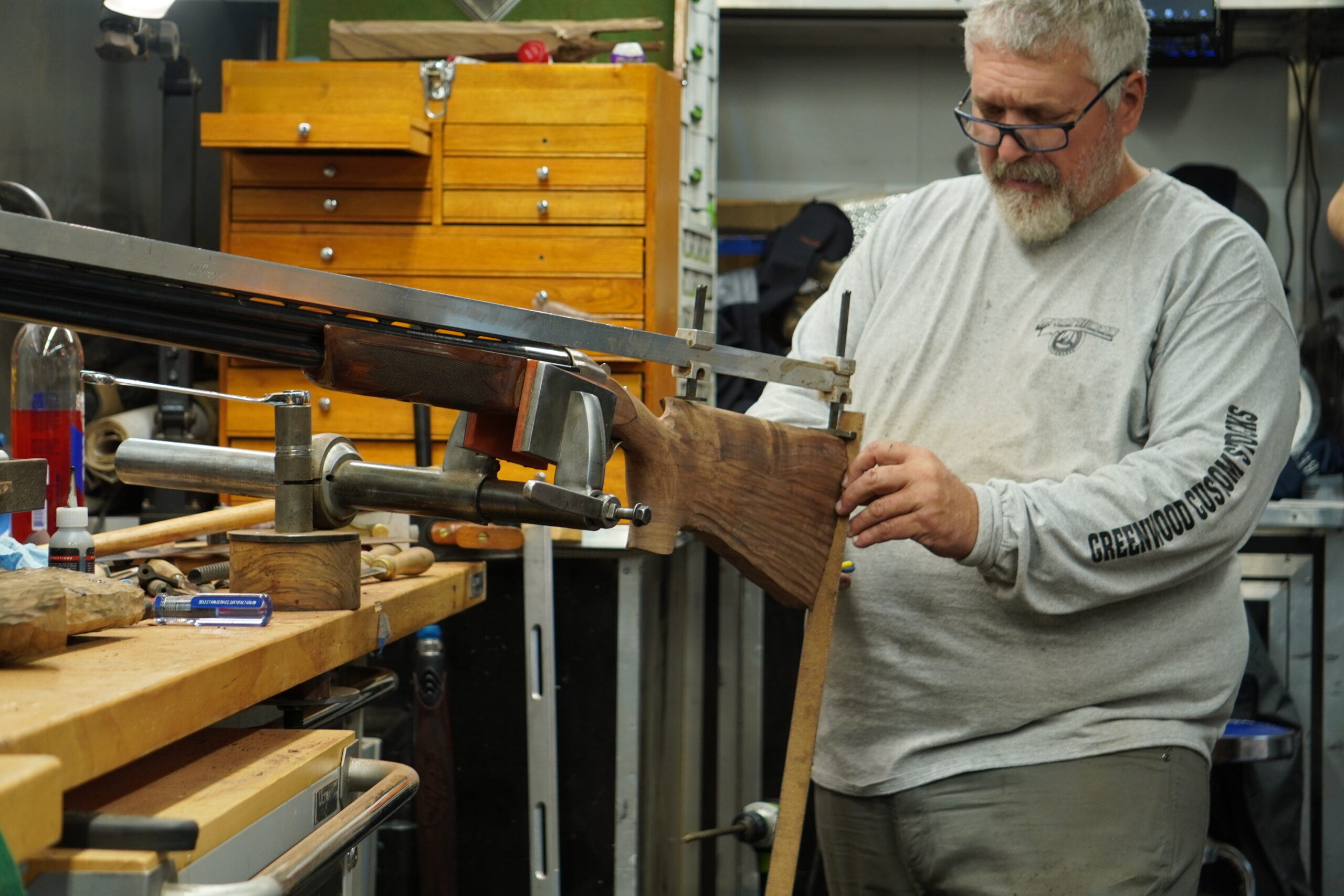
One of the defining features of Jim Greenwood's custom stocks is the emphasis on tailored ergonomics. Each stock is designed with the shooter's physical dimensions, preferences, and shooting mechanics in mind. Whether it's the length of pull, drop at comb, or cast, Greenwood ensures that the stock optimally aligns with the shooter's body, providing the comfort and control necessary for success in the dynamic world of sporting clays. Greenwood’s stocks most notable feature is the pistol grip which has a specific aesthetic to it which draws attention but more importantly features a palm-swell which locks the shooters hand in place with proper wrist alignment to mitigate recoil.


Collaboration with Shooters


Jim Greenwood's approach is collaborative. He engages in extensive discussions with his clients, understanding not only their physical attributes but also their shooting habits and aspirations. This collaborative effort ensures that each stock is a reflection of the shooter's unique identity, resulting in a symbiotic relationship between the shooter and their firearm.

The Clay Lab Network Articles is Brought to You by
1JP02324

Photo Credit: The Clay Lab - Jim Greenwood

Performance on the Sporting Clays Course


The impact of a custom gun stock on performance cannot be overstated. Shooters who invest in Greenwood's craftsmanship often report improved consistency, reduced felt recoil, and heightened accuracy on the sporting clays course. The seamless integration of the shooter and the firearm allows for a more intuitive and fluid shooting experience.


Innovation and Technology


While rooted in traditional craftsmanship, Jim Greenwood has recently talked about embracing modern technology to enhance his stock-making process. From precision machining to hand crafted skills, Greenwood is working to combine the best of both worlds to create stocks that harmonize the timeless artistry of stock making with the advantages of contemporary innovation.

Conclusion


In the pursuit of excellence in sporting clays, every detail matters, and the custom gun stock is no exception. Jim Greenwood's dedication to craftsmanship and his ability to create stocks that resonate with the individual shooter's needs have elevated him to a prominent position in the world of custom gun stocks. For those who seek not only precision in shooting but also a personalized connection with their firearm, a Jim Greenwood custom stock is more than an accessory; it's a testament to the artistry and science that define the world of sporting clays.

Back to Articles Home
Videos by The Clay Lab Network
Podcasts by The Clay Lab Network